Build with ClusterD

Developer resources

Find the documentation, examples, community channels, and language bindings you need to build frameworks and integrations for ClusterD and Apache Mesos®.

Start here

Learn the APIs and framework model.

The ClusterD documentation explains the architecture, scheduler and executor APIs, HTTP endpoints, and framework development workflow.

Use the application framework development guide as the starting point for a new framework. The ClusterD source repository and its tests provide implementation examples and a place to discuss changes.

Examples and bindings

Use a language API that fits your project.

Go bindings for ClusterD

clusterd-go provides idiomatic Go bindings for the ClusterD v1 HTTP and Protocol Buffer APIs, including scheduler and executor APIs. The repository also includes example programs for building ClusterD frameworks.

Open clusterd-go ↗
Python HTTP library

python-avmesos is a Python library for creating Mesos® schedulers through the HTTP REST API, without relying on the older native Python bindings. Its README includes a sample scheduler and callback-based client usage.

Open python-avmesos ↗
Docker Desktop

Run ClusterD from your desktop.

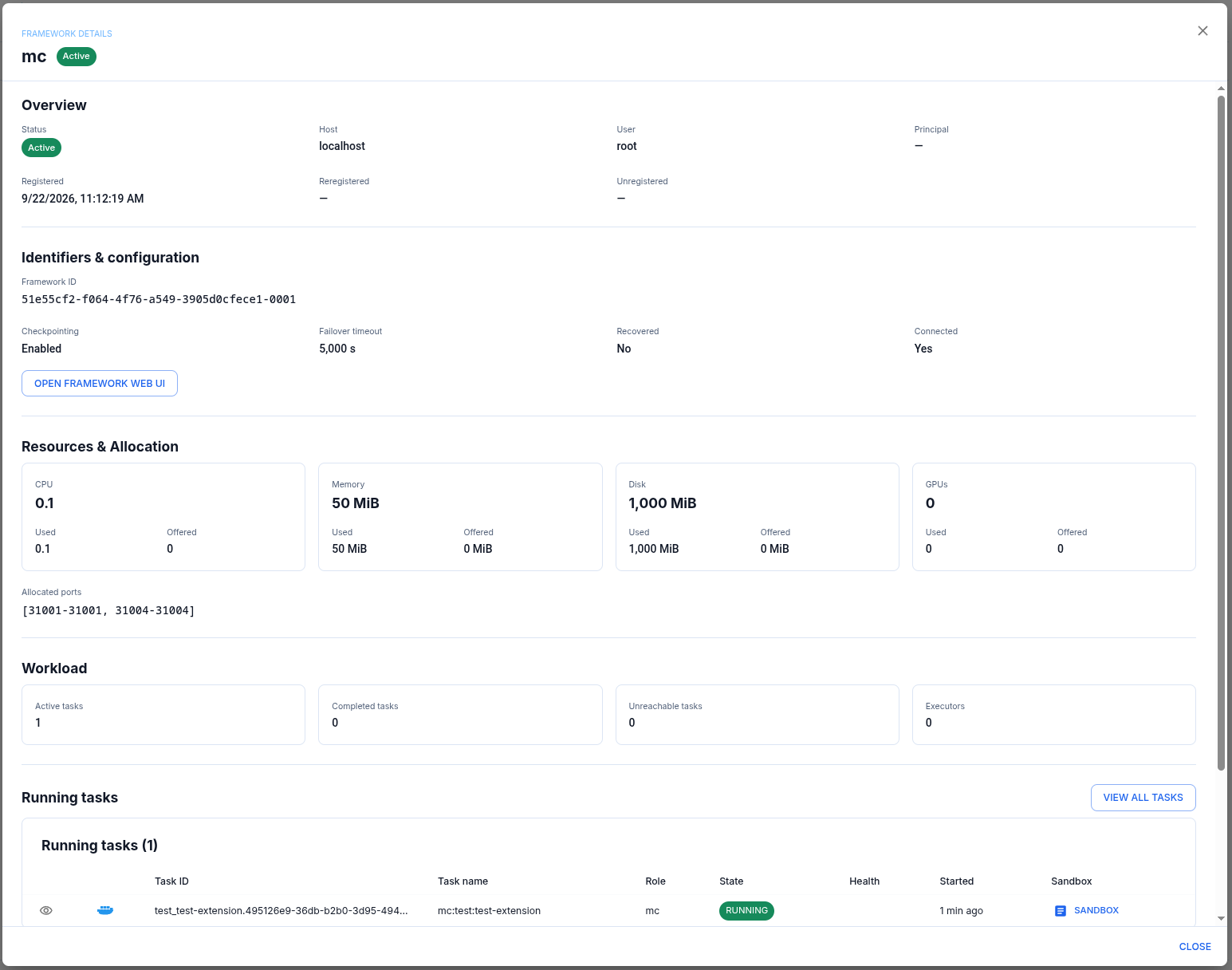
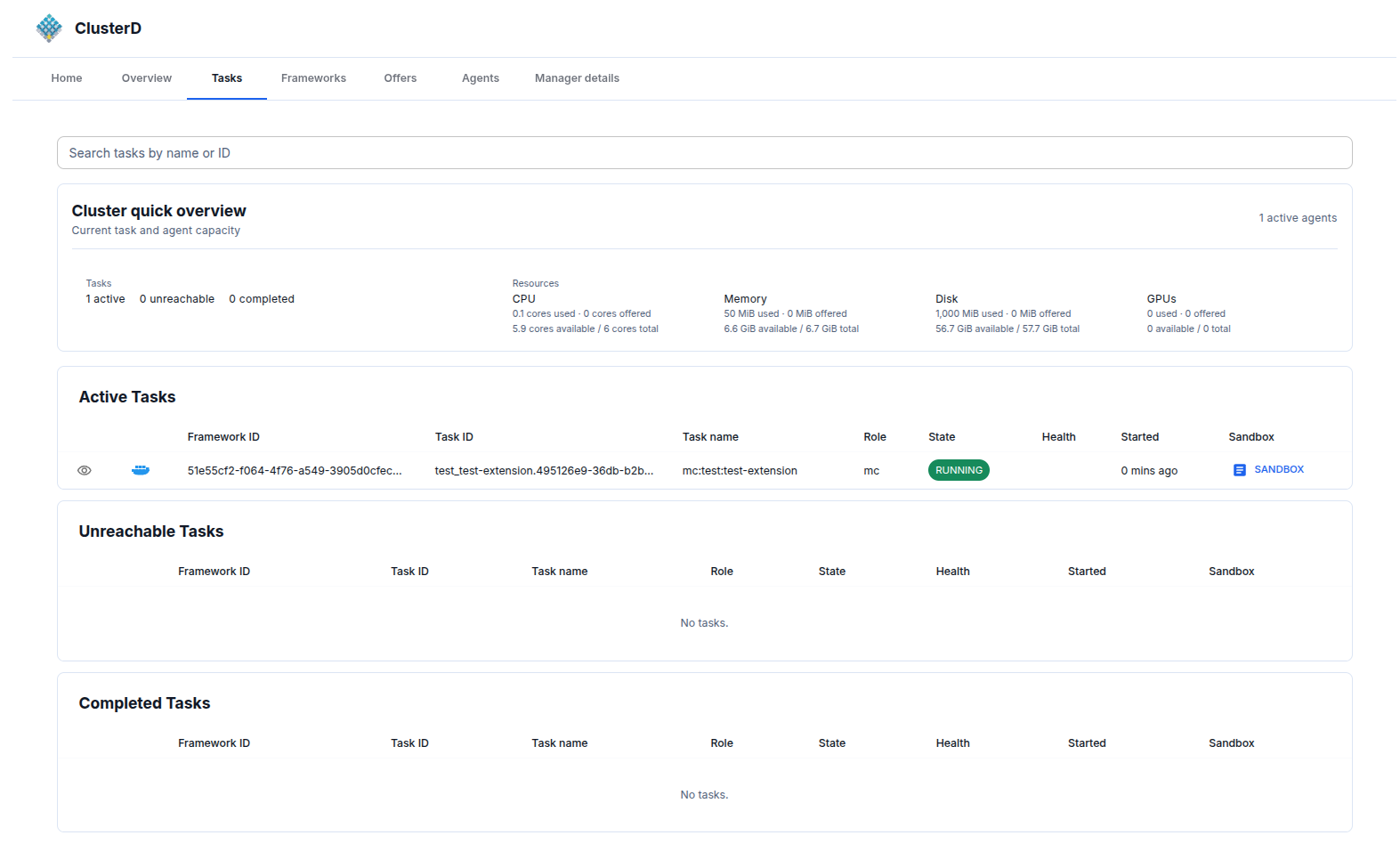
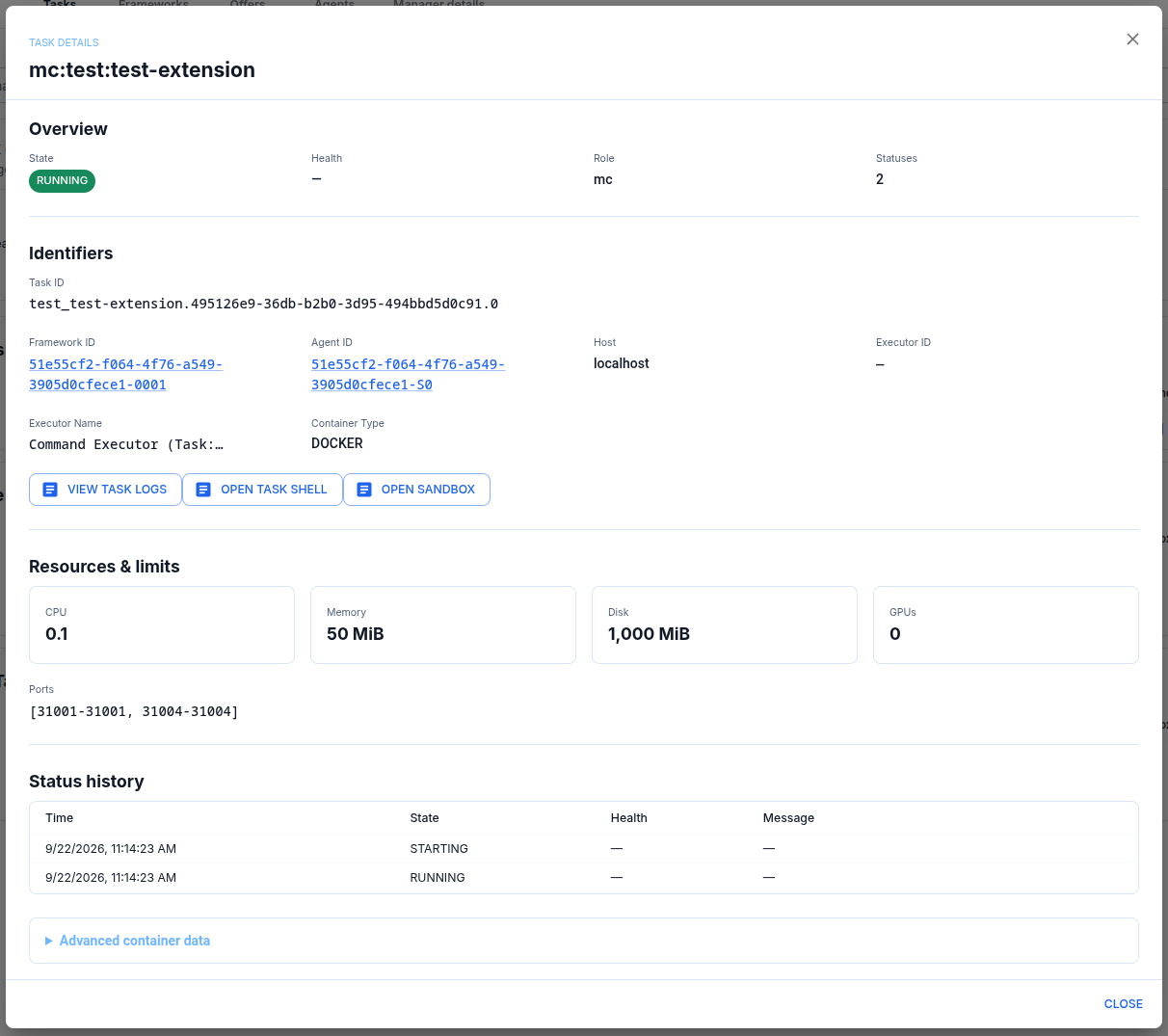
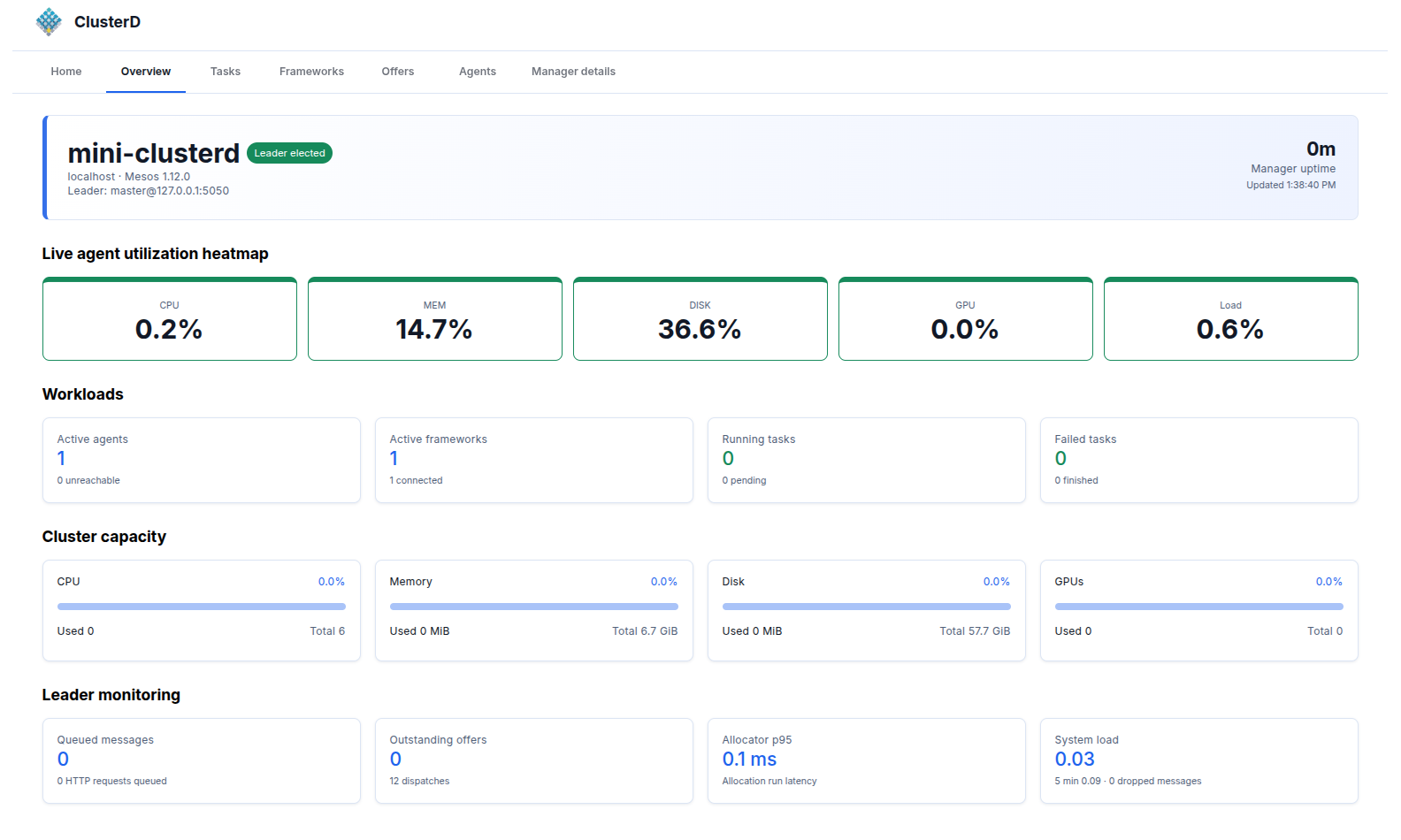
The ClusterD Docker Desktop Extension brings a ClusterD-oriented Mesos interface into Docker Desktop so developers can deploy and test applications from a familiar local environment.

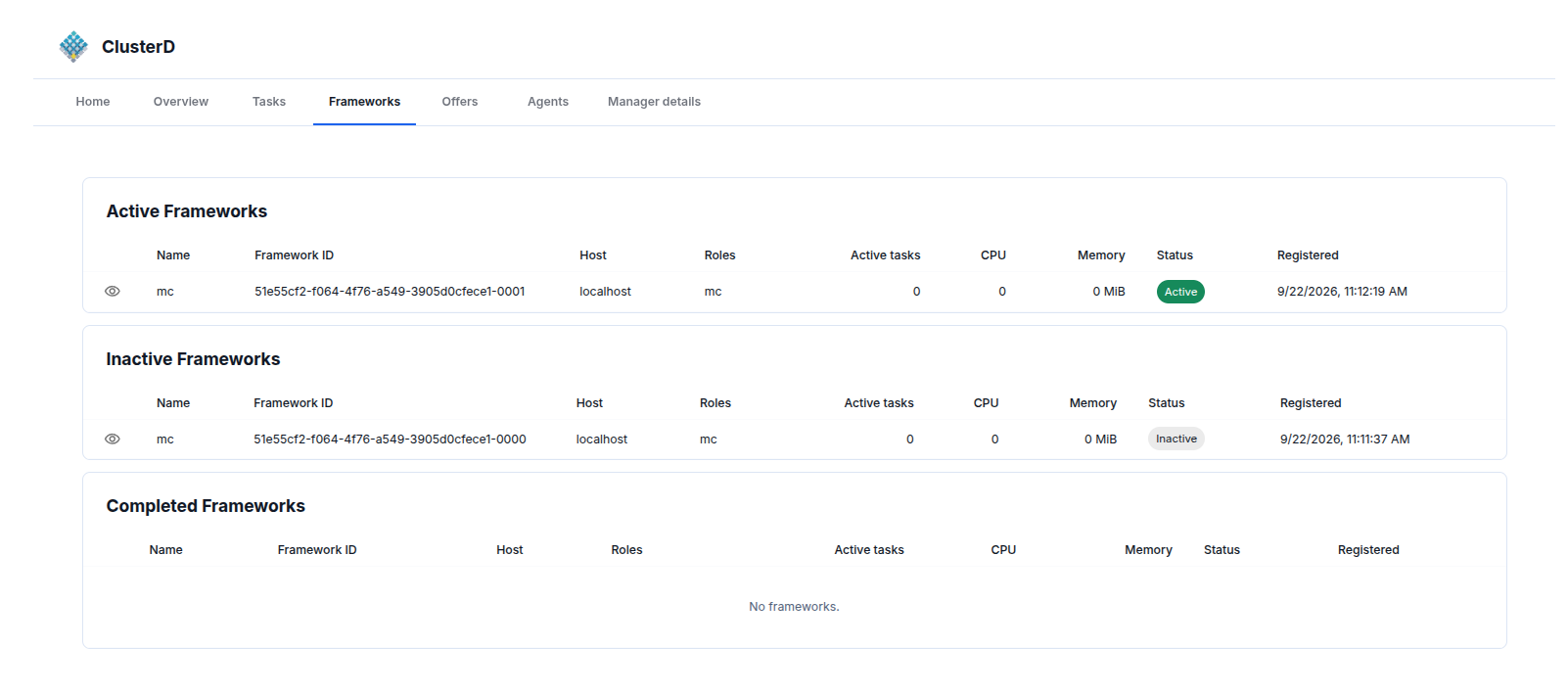
Explore the extension source for build, install, and local UI development instructions. The screenshots below show its overview, framework, and task views.

View the Docker extension
Community

Build in the open.

Share questions, report issues, and propose improvements through the ClusterD community page. The project’s GitHub repositories contain issue trackers and contribution guidance; the Matrix room is available for community conversation.